

Japanese Autumn Food: 5 Seasonal Dishes to Try at Home
Autumn in Japan is a season to enjoy with all the senses — and food is a particularly important part of it.
As the weather begins to cool, Japanese tables gradually change too. Sanma, mushrooms, sweet potato, chestnuts and newly harvested rice are among the ingredients that can make autumn feel distinct from the seasons around it.
This connection between food and the seasons is part of a wider idea in Japanese cooking: enjoying ingredients when they are considered to be at their seasonal best.
In Japanese, this idea is often expressed with the word shun (旬).
Enjoy what the season has to offer, while it is here.You do not need to prepare an elaborate traditional meal to experience it. A few mushrooms added to rice, sweet potato stirred into miso soup or a simply grilled sanma can be enough to bring a little Japanese autumn into your kitchen.
In this guide, we explore the idea of seasonal eating in Japan and share five Japanese autumn dishes you can actually try at home, including three complete recipes you can follow in full.
In This Guide
- What Is Shun? Seasonal Eating in Japan
- Why Is Autumn Special for Food in Japan?
- 5 Japanese Autumn Dishes to Try at Home
- 1. Grilled Sanma with Grated Daikon
- 2. Mushroom Takikomi Gohan
- 3. Kinoko Udon
- 4. Japanese Vegetable Curry
- 5. Mushroom Miso Soup with Sweet Potato
- Build a Japanese Autumn Meal
- Japanese Autumn Pantry Essentials
- Frequently Asked Questions
- Sources
■ What Is Shun? Seasonal Eating in Japan
Many ingredients are now available throughout the year, but seasonality still plays an important role in Japanese food culture.
The Japanese word shun (旬) refers to the season when a particular food is considered to be at its natural seasonal best.
That might mean a vegetable or fruit during its traditional harvest period, or a fish during the season when it is particularly associated with Japanese cooking.
The Japanese Ministry of Agriculture, Forestry and Fisheries introduces shun as a way to experience both the blessings of nature and the changing seasons through food.
About shun: MAFF lists sweet potato, persimmon, sanma and chestnuts among examples of foods associated with autumn. Read the MAFF guide to food and the Japanese seasons .
You can bring the same idea into everyday cooking without changing your entire menu.
Miso soup can be enjoyed throughout the year, for example, but the ingredients inside it can change with the seasons. Rice can be cooked with seasonal vegetables or mushrooms. Familiar Japanese curry can take on a different character simply by changing the vegetables you add.
A simple way to think about seasonal Japanese cooking: keep the everyday dish, but change some of the ingredients with the season.
Shokuyoku no Aki — Autumn Appetite
Japan also has the familiar expression shokuyoku no aki (食欲の秋), often translated as “autumn appetite”.
It reflects the close association between autumn and the pleasure of eating, as rice, fish, mushrooms, root vegetables, fruit and other ingredients come into season.
So Japanese autumn food is not simply about eating something hot because the weather is cooler.
It is also about noticing the season through what is on the table.
■ Why Is Autumn Special for Food in Japan?
Some ingredients have become particularly closely associated with autumn in Japanese food culture.
Mushrooms are now cultivated and available beyond autumn, but they remain strongly connected with the idea of autumn flavours in Japan.
Autumn mushrooms: Japan's Forestry Agency introduces mushrooms as a familiar food traditionally enjoyed as one of the flavours of autumn. Read the Forestry Agency guide to mushrooms .
Sanma is another particularly recognisable taste of the season. Simply grilled with salt, it makes an autumn meal that needs very little embellishment.
■ 5 Japanese Autumn Dishes to Try at Home
These are not meant to be five complicated meals you need to master at once.
Choose one that suits the way you like to cook and use it as a starting point for experiencing Japanese autumn food at home.
Grilled Sanma with Grated Daikon
A classic taste of autumn in Japan

Few ingredients evoke Japanese autumn quite like sanma, or Pacific saury.
One of the best-known ways to enjoy it is also one of the simplest: season the fish lightly with salt, grill it and serve it with grated daikon.
A little soy sauce and a squeeze of citrus can be added at the table.
Mini Recipe
You'll Need
- 2 sanma
- Salt
- About 100g daikon
- Soy sauce
- Sudachi or lemon, optional
Quick Method
- Defrost the sanma according to the packet instructions if using frozen fish.
- Pat dry and season lightly with salt.
- Grill until thoroughly cooked and lightly crisp on the outside.
- Grate the daikon and serve it alongside the fish.
- Finish with a little soy sauce and citrus if you like.
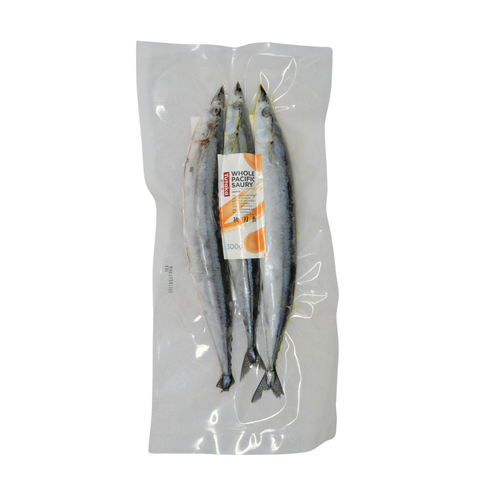
Yutaka Whole Pacific Saury - Sanma 300g
Whole Pacific saury, or sanma, a fish closely associated with the autumn season in Japan.
Keep it simple by seasoning with salt and grilling until thoroughly cooked, then serve with grated daikon, soy sauce and a little citrus if you like.
Best for: recreating a classic Japanese autumn meal at home.
Shop Yutaka SanmaTry it as a complete meal: Grilled Sanma + Japanese Rice + Miso Soup + a small Japanese side dish.
Best for: experiencing one of the most recognisable flavours of Japanese autumn.
Mushroom Takikomi Gohan
Autumn in a bowl of Japanese rice

If you would like to start with one autumn rice dish, Mushroom Takikomi Gohan is an excellent choice.
Takikomi gohan is a Japanese dish in which rice, ingredients and seasonings are cooked together. Mushrooms work particularly well because their savoury flavour becomes part of the rice as it cooks.
Our full version combines Japanese short-grain rice with dried shiitake, fresh mushrooms, carrot, soy sauce and mirin — and it is cooked in a saucepan, so you do not need a rice cooker.
Mini Recipe
You'll Need
- Japanese short-grain rice
- Dried shiitake
- Fresh mushrooms
- Carrot
- Soy sauce
- Mirin
- Cooking sake, optional
Quick Method
- Soak the shiitake and reserve the soaking liquid.
- Wash and soak the Japanese rice for around 30 minutes.
- Combine the seasonings with the mushroom liquid and water.
- Place the mushrooms and carrot over the rice in a tightly covered saucepan.
- Bring to the boil, cook over a very low heat, then leave covered to steam before gently mixing.
Follow our complete step-by-step recipe, including cooking-liquid measurements, resting time and tips for perfectly cooked Japanese rice.
View the Mushroom Takikomi Gohan RecipeBest for: an autumn Japanese rice dish that can become the centre of a simple meal.
Kinoko Udon
A warming mushroom noodle bowl for cooler evenings

As the evenings become cooler, a steaming bowl of udon is an easy way to turn seasonal mushrooms into dinner.
Kinoko simply means mushroom in Japanese. Add shiitake, shimeji, maitake or a mixture of mushrooms to a Japanese-style broth, then finish the bowl with spring onion and wakame.
Mini Recipe
You'll Need
- 2 portions udon
- About 150g mixed mushrooms
- 600ml dashi
- 2 tbsp soy sauce
- 2 tbsp mirin
- Spring onion
- Wakame, optional
Quick Method
- Prepare the mushrooms and cut or separate them into bite-sized pieces.
- Heat the dashi with soy sauce and mirin.
- Add the mushrooms and cook until tender.
- Prepare the udon according to the packet instructions and add it to the broth.
- Serve with spring onion and wakame.
Make it your own: add tofu, an egg, spinach or a little shichimi togarashi depending on what you have at home.
Best for: a quick Japanese noodle night when the first cooler autumn evenings arrive.
Japanese Vegetable Curry with Autumn Vegetables
Give a familiar Japanese favourite a seasonal twist

Japanese curry is enjoyed throughout the year, which makes it particularly easy to adapt with the seasons.
For an autumn-inspired version, try adding mushrooms, sweet potato and pumpkin alongside onion and carrot.
This is not presented as a specific traditional autumn curry. Instead, it is a practical example of how a familiar Japanese home-style dish can change simply by using vegetables that feel right for the season.
Mini Recipe
You'll Need
- Onion
- Carrot
- Sweet potato
- Pumpkin or winter squash
- Mushrooms
- Japanese curry roux
- Japanese rice
Quick Method
- Cut the vegetables into bite-sized pieces.
- Gently fry the onion and carrot.
- Add the sweet potato, pumpkin and water and simmer until nearly tender.
- Add the mushrooms, then dissolve the curry roux into the sauce.
- Simmer until thickened and serve with freshly cooked Japanese rice.
Our full Japanese Vegetable Curry recipe gives you exact quantities for four servings and step-by-step cooking instructions.
View the Japanese Vegetable Curry RecipeBest for: an easy family dinner that brings autumn vegetables into Japanese home cooking.
Mushroom Miso Soup with Sweet Potato
One of the easiest ways to cook with the seasons

Miso soup may be enjoyed throughout the year, but changing its ingredients is one of the simplest ways to make everyday Japanese cooking feel seasonal.
For autumn, mushrooms and sweet potato make an especially satisfying combination.
The mushrooms bring savoury depth, while the sweet potato becomes soft and gently sweet as it cooks in the dashi.
Mini Recipe
You'll Need
- Dashi
- Fresh mushrooms
- Sweet potato
- Miso paste
- Wakame
- Spring onion
Quick Method
- Cut the sweet potato into small pieces and prepare the mushrooms.
- Simmer the sweet potato in dashi until almost tender.
- Add the mushrooms and cook for a few more minutes.
- Reduce the heat and dissolve the miso into the soup.
- Add wakame, gently warm through and finish with spring onion.
The full recipe includes a kombu and dried shiitake dashi, exact ingredient quantities and tips for adding miso correctly.
View the Mushroom Miso Soup RecipeBest for: an easy first step into Japanese seasonal cooking.
■ Build a Japanese Autumn Meal at Home
You do not have to prepare all five dishes. Choose one main idea and add one or two simple sides around it.
Grilled Sanma + Japanese Rice + Mushroom Miso Soup + Small Side Dish
Mushroom Takikomi Gohan + Mushroom Miso Soup + Japanese Pickles
Kinoko Udon + Gyoza
Japanese Vegetable Curry + Japanese Rice + Pickles
If you are new to Japanese cooking, the Takikomi Gohan + Miso Soup combination is an especially good place to start. Both dishes use familiar Japanese pantry ingredients while letting seasonal mushrooms take centre stage.
Try our Mushroom Takikomi Gohan Recipe with our Mushroom Miso Soup with Sweet Potato .
■ Japanese Autumn Pantry Essentials
The easiest way to cook seasonally is not to replace your entire cupboard every few months.
Keep a few Japanese essentials at home, then add seasonal ingredients when you shop.
Autumn Japanese Cooking Formula
This approach works beyond autumn too.
Change the ingredients in your soup. Cook a different vegetable with your rice. Add seasonal produce to a curry you already know how to make.
You do not need a completely new recipe every season to enjoy the Japanese idea of shun.
■ Japanese Autumn Food Is About Noticing the Season
Japanese autumn food does not have to mean preparing an elaborate traditional feast.
It can be as simple as grilling sanma with salt.
Or adding mushrooms to Japanese rice.
Or putting sweet potato into your next bowl of miso soup.
The idea is to let the season influence what you cook, even if the basic dish itself is familiar.
This autumn, try starting with just one recipe:
For a classic taste of autumn: Try Yutaka Whole Pacific Saury - Sanma .
For rice: Mushroom Takikomi Gohan .
For an easy family dinner: Japanese Vegetable Curry .
For something simple and warming: Mushroom Miso Soup with Sweet Potato .
One seasonal ingredient can be enough to make an everyday meal feel like autumn.
■ Frequently Asked Questions
What is Japanese autumn food?
Japanese autumn food includes ingredients and dishes associated with the autumn season in Japan. Sanma, mushrooms, sweet potato, chestnuts and new-season rice are some well-known examples of foods linked with autumn.
What does shun mean in Japanese food?
Shun refers to the season when a particular ingredient is considered to be at its seasonal best. The idea encourages people to notice the changing seasons through food and ingredients.
What is shokuyoku no aki?
Shokuyoku no aki literally refers to the idea of an “autumn appetite”. It is a familiar Japanese expression connecting autumn with the enjoyment of seasonal foods and eating.
What fish is associated with autumn in Japan?
Sanma, or Pacific saury, is one of the fish most strongly associated with autumn in Japan. A well-known way to serve it is simply grilled with salt and accompanied by grated daikon.
How do you eat grilled sanma?
A simple Japanese-style way to enjoy sanma is to grill it with salt and serve it with grated daikon. A small amount of soy sauce and citrus such as sudachi or lemon can also be added at the table.
What Japanese rice dish is good for autumn?
Mushroom takikomi gohan is an excellent autumn rice dish. Japanese rice is cooked together with mushrooms and seasonings such as soy sauce and mirin, allowing the mushroom flavour to become part of the rice.
Can I make takikomi gohan without a rice cooker?
Yes. Takikomi gohan can be cooked in a saucepan with a tightly fitting lid. Our Mushroom Takikomi Gohan recipe uses a saucepan method rather than a rice cooker.
What vegetables work well in Japanese curry in autumn?
Mushrooms, sweet potato and pumpkin or winter squash are easy ways to give Japanese vegetable curry an autumn feel. Onion and carrot can be used alongside them as part of the curry base.
Can you put sweet potato in miso soup?
Yes. Sweet potato can be simmered in dashi until tender before the miso is added. Its gentle sweetness works particularly well with savoury mushrooms.
Are mushrooms an autumn food in Japan?
Many cultivated mushrooms are now available throughout the year, but mushrooms have long been associated with autumn flavours and seasonal cooking in Japan.
■ Sources
-
Ministry of Agriculture, Forestry and Fisheries — Food and the Japanese Seasons
Official information explaining the Japanese idea of shun and giving examples of seasonal foods, including sweet potato, persimmon, sanma and chestnuts in autumn.
View the MAFF source -
Forestry Agency of Japan — About Mushrooms
Official information on mushrooms in Japan, including their long association with the flavours of autumn.
View the Forestry Agency source -
Japan National Tourism Organization — Japan's Seasonal Eats
JNTO information exploring seasonal Japanese foods and the connection between Japanese cuisine and the changing seasons.
View the JNTO source