

What Is Mirin? How to Use This Essential Japanese Seasoning

From glossy teriyaki to comforting Japanese simmered dishes, mirin is one of the seasonings that helps create the sweet-savoury balance associated with Japanese home cooking.
But if you shop for Japanese ingredients in the UK, the labels can be confusing. You may find bottles marked mirin, hon mirin, mirin seasoning or Honteri – and they are not necessarily the same product.
Mirin is a Japanese seasoning used to add gentle sweetness, depth and an attractive gloss to food. Japan’s Ministry of Agriculture, Forestry and Fisheries (MAFF) also identifies other traditional cooking effects, including helping seasoning penetrate ingredients, helping foods hold their shape during simmering and reducing unwanted odours.
Source: Ministry of Agriculture, Forestry and Fisheries of Japan (MAFF), Traditional Foods of Japan. View the MAFF source
In this guide, we explain what mirin is, what mirin is made of, hon mirin vs Honteri, mirin vs sake, mirin vs rice vinegar, how to use mirin and what you can use as a substitute for mirin.
Table of Contents
- ■ What Is Mirin?
- ■ What Is Mirin Made Of?
- ■ Hon Mirin vs Honteri vs Mirin Seasoning
- ■ What Does Mirin Taste Like?
- ■ Mirin vs Sake vs Rice Vinegar
- ■ How Is Mirin Used in Japanese Cooking?
- ■ How to Use Mirin at Home
- ■ What Can I Use Instead of Mirin?
- ■ Where to Buy Mirin in the UK
- ■ Frequently Asked Questions About Mirin
- ■ Sources
■ What Is Mirin?
Mirin is a traditional Japanese seasoning valued for its gentle sweetness, depth of flavour and ability to add gloss and shine to cooked food.
According to MAFF, traditional mirin is made using rice koji, steamed glutinous rice and a distilled spirit such as shochu. Historically, mirin was consumed as a sweet alcoholic drink, but it gradually became established as a cooking seasoning during the Edo period.
Source: Ministry of Agriculture, Forestry and Fisheries of Japan (MAFF). Read about mirin in MAFF’s Traditional Foods of Japan
Today, mirin is used in teriyaki, nimono or Japanese simmered dishes, meat and fish dishes, noodle sauces, donburi sauces, dipping sauces and glazes.
You may also see mirin described in English as “sweet rice wine”, which explains searches such as “mirin rice wine”. That description is useful as a starting point for traditional alcoholic mirin, but it can be misleading if applied to every product labelled mirin. Very low-alcohol mirin-style seasonings also exist, so checking the individual bottle is important.
■ What Is Mirin Made Of?
Traditional mirin is made using rice, rice koji and alcohol such as shochu.
MAFF explains that steamed glutinous rice and rice koji are combined with a distilled spirit. Japan’s National Tax Agency describes a traditional mirin-making period of around 40 to 60 days, during which koji enzymes transform rice starch and protein into sugars, amino acids and other components that contribute to mirin’s distinctive flavour.
Sources: MAFF and the National Tax Agency of Japan. View the MAFF source or view the National Tax Agency document.
However, mirin ingredients vary by product. Hon mirin, mirin seasoning and mirin-style seasoning can have different formulations and very different alcohol levels.
The National Tax Agency distinguishes mirin-style seasoning from alcoholic mirin and notes that mirin-style seasoning contains less than 1% alcohol under the Japanese classification.
Source: National Tax Agency of Japan. View the official document
■ Hon Mirin vs Honteri vs Mirin Seasoning
Hon mirin, Honteri and mirin seasoning are related cooking products, but they are not identical. Understanding this difference makes it much easier to choose a bottle for Japanese cooking.
| Hon Mirin | Mirin Seasoning | Honteri / Mirin-Style Seasoning | |
|---|---|---|---|
| What it is | Traditional alcoholic mirin | A cooking seasoning designed for mirin-style use | A very low-alcohol mirin-style seasoning |
| Alcohol | Significant alcohol content | Depends on the individual product | Less than 1% under the Japanese mirin-style seasoning category |
| Typical use | Traditional Japanese cooking | Everyday cooking, sauces and simmered dishes | Everyday Japanese cooking where a low-alcohol mirin-style product is preferred |
| Yutaka Shop example | Takara Hon Mirin 13.6% 300ml | Yutaka Mirin Sweet Rice Seasoning 150ml | Mizkan Honteri Mirin Sweet Seasoning 275ml |
What Is Hon Mirin?
Hon mirin is traditional alcoholic mirin. Under Japan’s Liquor Tax Act, mirin is a separate alcoholic beverage category made using ingredients including rice, rice koji and shochu or alcohol.
For example, Takara Hon Mirin 300ml sold by Yutaka Shop Online contains 13.6% ABV. Its listed ingredients are water, glutinous rice, rice koji, distilled alcohol and glucose syrup.
What Is Honteri?
Honteri is a mirin-style seasoning rather than hon mirin. The Mizkan Honteri sold by Yutaka Shop Online contains 0.12% alcohol, making it very different from Takara Hon Mirin at 13.6% ABV.
Its listed ingredients include glucose syrup, water, spirit vinegar, fermented rice alcohol, sugar, citric acid and cane molasses.
What Is Mirin Seasoning?
Mirin seasoning is a cooking seasoning intended to provide mirin-like sweetness, balance and gloss. The exact recipe varies by brand, so it should not automatically be treated as the same product as hon mirin.
Yutaka Mirin Sweet Rice Seasoning 150ml contains glucose syrup, water, fermented rice alcohol, sugar, spirit vinegar, citric acid and cane molasses. It is designed for cooking and can be used in dishes such as simmered vegetables, simmered fish, braised pork belly and noodle soup bases.
Everyday mirin cooking seasoning → Mirin Seasoning
Very low-alcohol mirin-style option → Honteri
■ What Does Mirin Taste Like?
Mirin has a gentle, rounded sweetness that works particularly well with savoury Japanese seasonings such as soy sauce.
Traditional mirin develops more than sweetness alone. During maturation, koji enzymes convert components of the rice into sugars, amino acids and other substances that contribute to its characteristic flavour.
Source: National Tax Agency of Japan. View the National Tax Agency source
This is why mirin is best thought of as a seasoning that helps balance and finish a dish, rather than simply a liquid sweetener.
■ Mirin vs Sake vs Rice Vinegar
Mirin, sake and rice vinegar are all familiar Japanese ingredients, but they play very different roles in cooking.
| Mirin | Sake | Rice Vinegar | |
|---|---|---|---|
| Main taste | Sweet and rounded | Generally much less sweet | Sour and acidic |
| Main cooking role | Sweetness, depth, gloss and balance | Aroma and flavour; also used as a drink depending on the product | Acidity and freshness |
| Common uses | Teriyaki, simmered dishes, sauces | Cooking, marinades and drinking sake | Sushi rice, dressings and pickles |
| Direct substitute for mirin? | — | No | No |
Mirin vs Sake: What’s the Difference?
Mirin and sake are different products and are often used together rather than interchangeably. The National Tax Agency defines sake primarily as a fermented product based on rice, rice koji and water, while mirin is classified separately and uses rice and rice koji with shochu or alcohol.
Source: National Tax Agency of Japan. View the official alcohol classification and mirin information
Mirin vs Rice Vinegar: What’s the Difference?
Mirin contributes sweetness; rice vinegar contributes acidity. They are therefore not direct substitutes for one another.
MAFF describes mirin as a seasoning valued for sweetness, gloss and other cooking effects, while vinegar is produced through a different fermentation process and is used for its acidity.
Source: Ministry of Agriculture, Forestry and Fisheries of Japan (MAFF). View the MAFF source
■ How Is Mirin Used in Japanese Cooking?
Mirin is used in Japanese cooking whenever a dish needs sweetness, balance, depth or an attractive glossy finish.
・ Teriyaki

Teriyaki is one of the easiest dishes in which to understand the purpose of mirin.
MAFF recommends a memorable all-purpose ratio of:
This combination can be used for dishes including chicken teriyaki. Mirin helps soften the saltiness of soy sauce and contributes to the glossy finish associated with teriyaki-style cooking.
Source: Ministry of Agriculture, Forestry and Fisheries of Japan (MAFF), guide to traditional seasoning ratios. View the MAFF guide
・ Nimono – Japanese Simmered Dishes

Mirin is widely used in Japanese simmered dishes made with vegetables, meat or fish. MAFF notes that mirin can help seasoning penetrate ingredients and can help food retain its shape during simmering.
・ Noodle Sauces

Mirin also works naturally with dashi and soy sauce. MAFF gives a ratio of dashi 12 : soy sauce 1 : mirin 1 for a noodle-style seasoning base.
・ Meat and Fish

As well as adding sweetness and gloss, MAFF identifies odour reduction as one of mirin’s traditional cooking effects, making it useful in meat and fish dishes.
■ How to Use Mirin at Home
If you are wondering how to use mirin for the first time, start by combining it with soy sauce.
Soy Sauce 1 : Sake 1 : Mirin 1
Dashi 12 : Soy Sauce 1 : Mirin 1
These ratios are useful starting points rather than rules for every dish. You can adjust them depending on the recipe and your preferred balance of sweetness and saltiness.
It is also important to check which type of mirin product you have. A bottle of 13.6% ABV hon mirin is not the same product as a 0.12% alcohol mirin-style seasoning. Follow the recipe and the instructions on your bottle.
■ What Can I Use Instead of Mirin?
No substitute perfectly replaces mirin because mirin contributes several things at once, including sweetness, flavour and gloss.
If you have no mirin and mainly need to reproduce the combination of a cooking-wine element and sweetness, sake with a small amount of sugar can sometimes be used as a practical approximation. However, it will not reproduce all of mirin’s flavour or traditional cooking effects.
Rice vinegar is not a direct substitute for mirin. Rice vinegar adds acidity rather than sweetness, so using it in the same quantity can significantly change the flavour of a dish.
You can also cook without mirin in some recipes, but the finished dish may have less sweetness, balance or gloss than intended.
■ Where to Buy Mirin in the UK
Yutaka Shop Online offers three mirin-related seasonings for different styles of Japanese cooking.
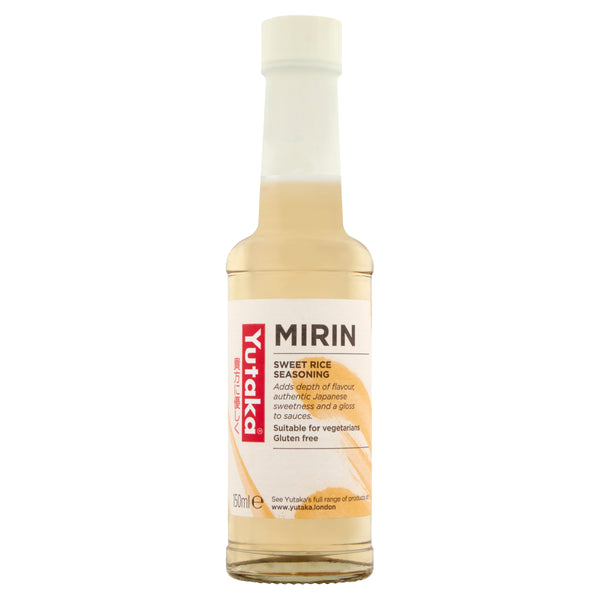
Yutaka Mirin Sweet Rice Seasoning 150ml
An everyday mirin seasoning for adding sweetness, depth and gloss to Japanese cooking.
It can be used in simmered vegetables and fish, braised pork belly, noodle soup bases and dipping sauces. The product is listed as gluten-free.
Best for: convenient everyday Japanese cooking.
Shop Yutaka Mirin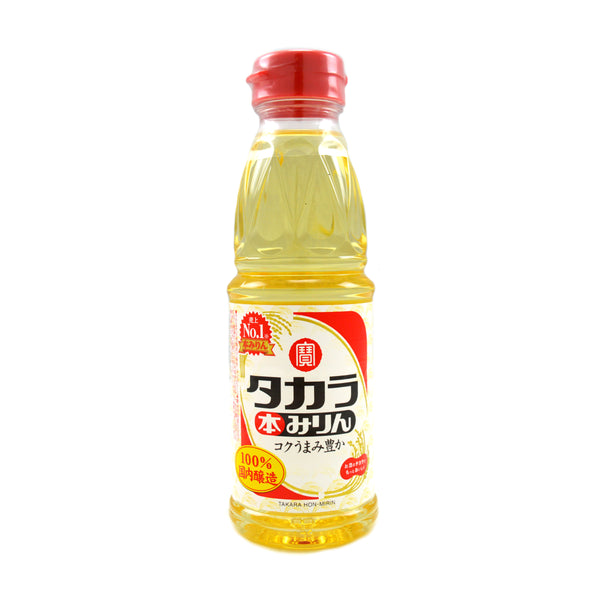
Takara Hon Mirin 13.6% 300ml
A traditional alcoholic hon mirin with an alcohol content of 13.6% ABV.
Its listed ingredients include water, glutinous rice, rice koji, distilled alcohol and glucose syrup.
Best for: cooks looking specifically for hon mirin for traditional Japanese dishes.
Shop Takara Hon Mirin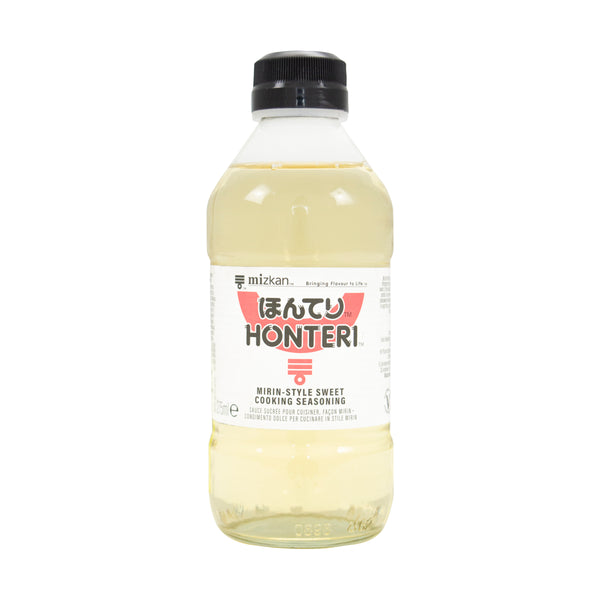
Mizkan Honteri Mirin Sweet Seasoning 275ml
A mirin-style seasoning containing 0.12% alcohol.
It is designed for Japanese dishes where you want mirin-style sweetness with very low alcohol content.
Best for: everyday Japanese cooking with a very low-alcohol mirin-style seasoning.
Shop Mizkan HonteriAlways check the latest product page and packaging before use, particularly for ingredients, allergens, alcohol content and storage instructions.
■ Frequently Asked Questions About Mirin
What is mirin?
Mirin is a Japanese seasoning used to add gentle sweetness, depth and gloss to food. Traditional mirin is made using ingredients including glutinous rice, rice koji and alcohol such as shochu.
What is mirin made of?
Traditional mirin is made from glutinous rice, rice koji and alcohol such as shochu. However, mirin ingredients vary by product, particularly between hon mirin and mirin-style seasonings.
Is mirin a rice wine?
Hon mirin is an alcoholic rice-based seasoning and is sometimes described in English as a sweet rice wine. However, very low-alcohol mirin-style seasonings are also sold, so not every product labelled mirin should be treated as the same type of rice wine.
What is hon mirin?
Hon mirin is traditional alcoholic mirin. It is different from low-alcohol mirin-style seasonings such as Honteri.
What is the difference between hon mirin and Honteri?
Hon mirin contains significant alcohol, while Honteri is a mirin-style seasoning with very low alcohol. For example, Yutaka Shop Online’s Takara Hon Mirin contains 13.6% ABV, while Mizkan Honteri contains 0.12% alcohol.
What is mirin sauce?
Mirin itself is a seasoning rather than a finished sauce. The phrase “mirin sauce” is often used for sauces that contain mirin alongside ingredients such as soy sauce and sake.
What is the difference between mirin and sake?
Mirin is noticeably sweet and is mainly used as a seasoning, while sake is generally much less sweet and may be used for drinking or cooking depending on the product. They are different products and are often used together in Japanese cooking.
Is mirin the same as rice vinegar?
No. Mirin adds sweetness and depth, while rice vinegar adds acidity. They are not direct substitutes for each other.
What can I use as a substitute for mirin?
There is no perfect substitute for mirin. In some recipes, sake with a small amount of sugar can approximate part of mirin’s sweetness and cooking-wine role, but the result will not be identical.
How do you use mirin in cooking?
Mirin is commonly used in teriyaki, simmered dishes, noodle sauces and glazes. A useful starting point from MAFF is equal parts soy sauce, sake and mirin for an all-purpose seasoning mixture.
■ Discover the Role of Mirin in Japanese Cooking
Mirin may look like a simple sweet seasoning, but its role in Japanese cooking is much broader.
It can add sweetness, help balance soy sauce, create an attractive gloss and contribute to the finished character of simmered, grilled and sauced dishes.
Once you understand the difference between hon mirin, mirin seasoning and Honteri, choosing the right bottle becomes much easier.
If you are trying mirin for the first time, start with one of the simplest combinations in Japanese home cooking:
It is an easy way to discover why mirin has remained such an important Japanese seasoning.
■ Sources
-
Ministry of Agriculture, Forestry and Fisheries of Japan (MAFF) – Traditional Foods of Japan
Information on traditional mirin ingredients, history and cooking effects including sweetness, gloss, seasoning penetration, shape retention during simmering and odour reduction.
View the MAFF source -
National Tax Agency of Japan – Alcoholic Beverage Product Knowledge
Information on the legal classification of mirin and sake, traditional mirin maturation, and the distinction between mirin and mirin-style seasoning containing less than 1% alcohol.
View the National Tax Agency document -
Ministry of Agriculture, Forestry and Fisheries of Japan (MAFF) – Traditional Seasoning Ratios
Official examples including soy sauce, sake and mirin at 1:1:1 and dashi, soy sauce and mirin at 12:1:1.
View the MAFF guide