

What Is Tobiko? Flying Fish Roe, Taste and Tobiko vs Masago

The tiny orange pearls scattered over sushi may look decorative, but they are also a distinctive Japanese ingredient with a character all their own.
Tobiko is flying fish roe – the eggs of flying fish – and is commonly used in Japanese cuisine, particularly as a topping or garnish for sushi.
Japan’s Ministry of Agriculture, Forestry and Fisheries (MAFF) describes the eggs of flying fish as tobiko and notes that they are popular as a sushi ingredient.
Source: Ministry of Agriculture, Forestry and Fisheries of Japan (MAFF), information on flying fish and tobiko. View the MAFF source
But what does tobiko taste like? Is tobiko the same as masago? Why can it be orange, black or green? And can you eat tobiko without sushi?
In this guide, we explain what tobiko is, what flying fish roe tastes like, tobiko vs masago, tobiko vs ikura, how tobiko is used in sushi and how to enjoy it at home.
Table of Contents
- ■ What Is Tobiko?
- ■ What Does Tobiko Taste Like?
- ■ What Is Tobiko Made From?
- ■ Tobiko vs Masago: What’s the Difference?
- ■ Tobiko vs Ikura: What’s the Difference?
- ■ How Is Tobiko Used in Sushi?
- ■ Why Does Tobiko Come in Different Colours?
- ■ Can You Eat Tobiko Without Sushi?
- ■ How to Use Tobiko at Home
- ■ Where to Buy Tobiko in the UK
- ■ Frequently Asked Questions About Tobiko
- ■ Sources
■ What Is Tobiko?
Tobiko is the roe, or eggs, of flying fish. In English it is commonly called flying fish roe.
MAFF describes the eggs of flying fish as tobiko and notes that they are popular as a sushi ingredient. Another MAFF publication states that individual flying fish eggs are around 1 mm in size and can be used for foods such as gunkan sushi.
Source: Ministry of Agriculture, Forestry and Fisheries of Japan (MAFF). View the flying fish source and view the MAFF information on flying fish eggs.
In sushi, these small eggs can add colour and a distinctive texture without overwhelming the other ingredients.
■ What Does Tobiko Taste Like?
Tobiko is especially known for its small, popping texture. The exact flavour, however, depends on how the roe has been seasoned.
Commercial tobiko products are often seasoned rather than sold as completely plain fish roe. For example, Yutaka Tobiko Orange contains 88% flying fish roe and is seasoned with ingredients including sugar, soy sauce and mirin. The product is also described as having a crunchy texture.
In sushi, the tiny eggs create a noticeable contrast with softer ingredients such as sushi rice and fish. Flavoured varieties can taste different again: wasabi tobiko, for example, combines flying fish roe with wasabi flavour for a sharper finish.
■ What Is Tobiko Made From?
Tobiko is made from flying fish roe.
MAFF identifies flying fish eggs as the ingredient known as tobiko. In commercial products, the roe is usually processed and may be seasoned with other ingredients.
For example, Yutaka Tobiko Orange lists Flying Fish Roe 88% as its main ingredient, alongside seasonings including sugar, soy sauce and mirin.
Because ingredients vary between products, always check the label if you need information about allergens, flavourings or other ingredients.
■ Tobiko vs Masago: What’s the Difference?
No. Tobiko and masago are not the same type of fish roe. The most important difference is the fish they come from.
| Tobiko | Masago | |
|---|---|---|
| Comes from | Flying fish | Capelin |
| English name | Flying Fish Roe | Capelin Roe |
| Appearance | Small fish roe, often sold in bright colours | Small fish roe, often orange when seasoned |
| Common uses | Sushi, rolls and garnishes | Sushi, rolls and garnishes |
| Same thing? | No | No |
MAFF identifies tobiko as flying fish eggs. In a separate MAFF export example, orange masago is listed as being made from capelin roe.
Source: Ministry of Agriculture, Forestry and Fisheries of Japan (MAFF). View the tobiko source and view the MAFF masago example.
Masago = Capelin Roe
Even when the two products look similar on a sushi menu, they come from different fish.
■ Tobiko vs Ikura: What’s the Difference?
Tobiko and ikura are also different types of fish roe.
Ikura = Salmon Roe
An official Aichi Prefecture resource distinguishes orange tobiko as flying fish eggs and ikura as salmon eggs.
Source: Aichi Prefecture official information. View the source
So although tobiko, masago and ikura all belong to the broad category of fish roe, they come from different fish and should be treated as separate ingredients.
■ How Is Tobiko Used in Sushi?
Tobiko is commonly used as a sushi ingredient or finishing garnish. MAFF specifically describes tobiko as popular for sushi.
・ Gunkan Sushi
Gunkan sushi is one of the clearest ways to enjoy the texture of tobiko. Sushi rice is wrapped with nori and topped with the roe.
・ Sushi Rolls
Tobiko can be used on top of sushi rolls or around the outside of a roll, where it adds both colour and texture. Yutaka Tobiko Orange is recommended for decorating sushi such as California rolls.
・ Sushi Garnishes
A small amount of tobiko can also be added as a finishing garnish to nigiri, rolls or other sushi dishes. Because the eggs are small, you do not need a large quantity to create a noticeable visual and textural accent.
■ Why Does Tobiko Come in Different Colours?

You may see tobiko in orange, black or green. Different colours do not necessarily mean the roe comes from a different fish.
Yutaka Shop Online offers several seasoned flying fish roe varieties, including Orange, Black and Wasabi Tobiko.
Orange Tobiko
Orange is one of the most familiar colours associated with tobiko. Yutaka Tobiko Orange is designed to add bright colour and crunchy texture to dishes such as sushi and California rolls.
Black Tobiko
Black tobiko can be used when you want a darker visual accent. Yutaka Tobiko Black is suggested for sushi, Japanese dishes, canapés and salads.
Wasabi Tobiko
Wasabi tobiko combines flying fish roe with wasabi flavour and a distinctive green appearance. Yutaka Tobiko Wasabi is recommended for sushi and can also be used as a finishing ingredient for dishes such as seafood pasta.
In other words, coloured tobiko varieties can be used to change both the visual character and flavour of a dish.
■ Can You Eat Tobiko Without Sushi?

Yes. Tobiko can be used beyond sushi.
Seasoned tobiko can work particularly well as a finishing ingredient because even a small amount adds colour and texture.
- canapés
- seafood dishes
- pasta
- salads
- rice bowls
Yutaka Tobiko Orange is suggested for uses including canapés, pasta, salads and dressings, while Black and Wasabi varieties can also be used beyond sushi.
These are modern serving ideas rather than a suggestion that every use is traditional Japanese cuisine.
■ How to Use Tobiko at Home

Tobiko is easiest to use as a finishing ingredient rather than something that needs complicated cooking.
Step 1: Add It to Sushi Rolls
Spoon a small amount over the top of a sushi roll or use it around the outside for extra colour and texture.
Step 2: Make Gunkan Sushi
Wrap a small portion of sushi rice with nori and add tobiko on top.
Step 3: Use It on Rice Bowls
Add a small amount to a seafood rice bowl as a finishing garnish.
Step 4: Finish Canapés or Salads
Use a little tobiko to add a colourful, popping texture just before serving.
Tobiko is a processed fish roe product, so storage and defrosting instructions should always be checked on the individual product.
For example, Yutaka Tobiko Orange is sold frozen and its product information states that after defrosting it should be stored below 4°C and consumed within five days. Always follow the latest instructions on the product you are using.
■ Where to Buy Tobiko in the UK
Yutaka Shop Online offers several seasoned tobiko products for sushi and other dishes.
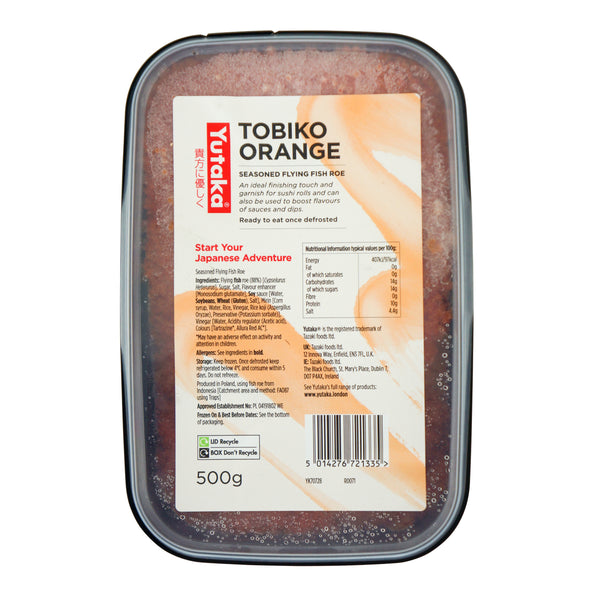
Yutaka Tobiko Orange Seasoned Flying Fish Roe 500g
A bright orange seasoned tobiko made with 88% flying fish roe and seasonings including sugar, soy sauce and mirin.
It can be used for sushi, California rolls, canapés, pasta and salads.
Best for: anyone trying tobiko for the first time or looking for the classic bright orange appearance.
Shop Orange Tobiko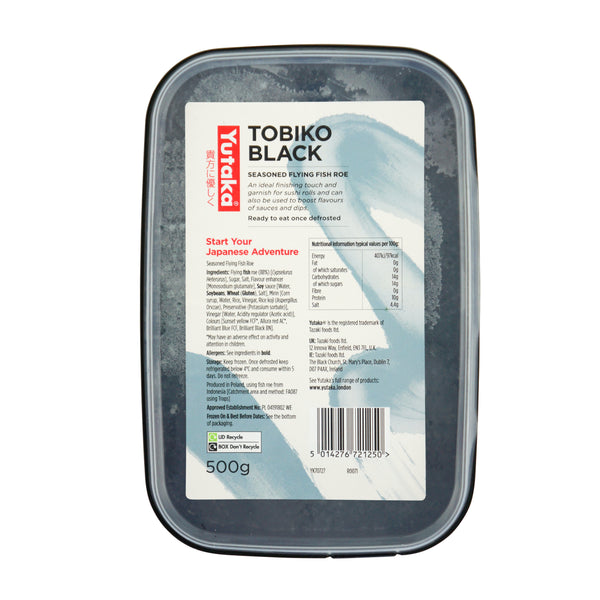
Yutaka Tobiko Black Seasoned Flying Fish Roe 500g
Seasoned flying fish roe with a distinctive black appearance.
It can be used to add contrast to sushi, Japanese dishes, canapés and salads.
Best for: dishes where you want a darker, more dramatic visual accent.
Shop Black Tobiko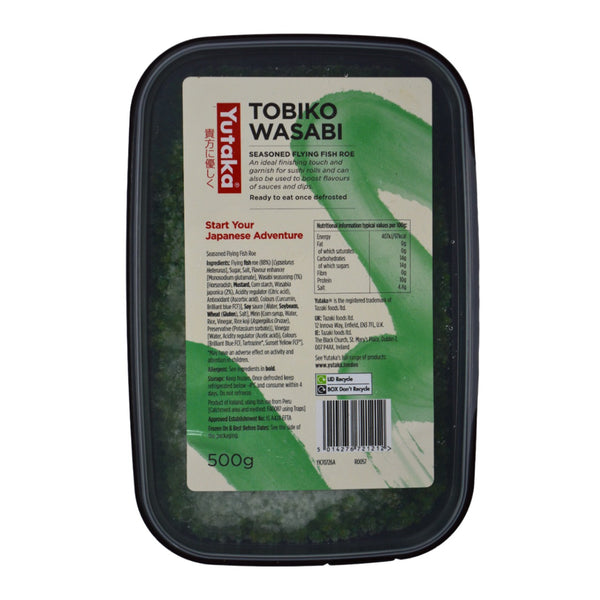
Yutaka Tobiko Wasabi – Wasabi Flavoured Flying Fish Roe 500g
Green flying fish roe seasoned with wasabi flavour.
Use it for sushi or as a finishing touch for modern dishes such as seafood pasta.
Best for: anyone who wants tobiko’s texture with an added wasabi note.
Shop Wasabi TobikoAlways check the latest product page and packaging before use, particularly for ingredients, allergens, storage, defrosting and consumption guidance.
■ Frequently Asked Questions About Tobiko
What is tobiko?
Tobiko is flying fish roe. It is commonly used in Japanese cuisine as a sushi ingredient or garnish.
What fish does tobiko come from?
Tobiko comes from flying fish. MAFF identifies flying fish eggs as the roe known as tobiko.
What does tobiko taste like?
The exact flavour depends on the seasoning used. Tobiko is especially known for its small, popping texture, while seasoned products may include ingredients such as soy sauce, mirin, sugar or wasabi flavour.
Is tobiko the same as masago?
No. Tobiko is flying fish roe, while masago is capelin roe. They may look similar when used in sushi, but they come from different fish.
What is the difference between tobiko and ikura?
Tobiko is flying fish roe, while ikura is salmon roe. Both are fish eggs, but they are different ingredients.
Is tobiko caviar?
Tobiko is fish roe, but it is not traditional sturgeon caviar. Tobiko comes from flying fish, while traditional caviar comes from sturgeon.
Why is tobiko orange, black or green?
Tobiko can be sold in different seasoned and coloured varieties. Orange, Black and Wasabi Tobiko can all be made from flying fish roe, with the colour and flavour depending on the product.
How is tobiko used in sushi?
Tobiko can be used in gunkan sushi, on sushi rolls, around the outside of rolls or as a finishing garnish for other sushi dishes.
Can you eat tobiko without sushi?
Yes. Depending on the product, tobiko can also be used with canapés, pasta, salads, seafood dishes and rice bowls.
■ Discover the Colour and Texture of Tobiko
Tobiko may be a small ingredient, but it can make a noticeable difference to a dish.
Its tiny flying fish eggs add colour, texture and visual contrast to sushi and other foods.
Masago = Capelin Roe
Ikura = Salmon Roe
If you are trying tobiko for the first time, orange tobiko is an easy place to start. Add a small amount to sushi, a seafood rice bowl or another dish where you want extra colour and a distinctive popping texture.
■ Sources
-
Ministry of Agriculture, Forestry and Fisheries of Japan (MAFF) – Flying Fish and Tobiko
Information confirming that the eggs of flying fish are used as tobiko and are popular as a sushi ingredient.
View the MAFF source -
Ministry of Agriculture, Forestry and Fisheries of Japan (MAFF) – Flying Fish Egg Information
Information on the approximate size of flying fish eggs and their use for foods such as gunkan sushi.
View the MAFF source -
Ministry of Agriculture, Forestry and Fisheries of Japan (MAFF) – Masago Export Example
Reference confirming capelin roe as the ingredient used for an orange masago product.
View the MAFF document -
Aichi Prefecture – Fish Roe Information
Official information distinguishing tobiko as flying fish eggs, ikura as salmon eggs and caviar as sturgeon roe.
View the Aichi Prefecture source