Make a colourful Japanese Vegetable Uramaki Sushi Bento with fresh avocado, cucumber and red pepper wrapped in seasoned sushi rice, nori and sesame seeds. Uramaki, also known as an inside-out sushi roll, has the rice on the outside and nori wrapped around the filling, making it an attractive and delicious addition to a homemade Japanese bento.
Customise your vegetable sushi rolls with your favourite fillings, then pack them into a bento box with sushi ginger, wasabi and soy sauce. Perfect for lunch, picnics or a Japanese-inspired meal at home, this vegetable uramaki recipe is a fun way to practise making homemade sushi.
材料
- Avocado, cucumber, red pepper or other vegetables of your choice
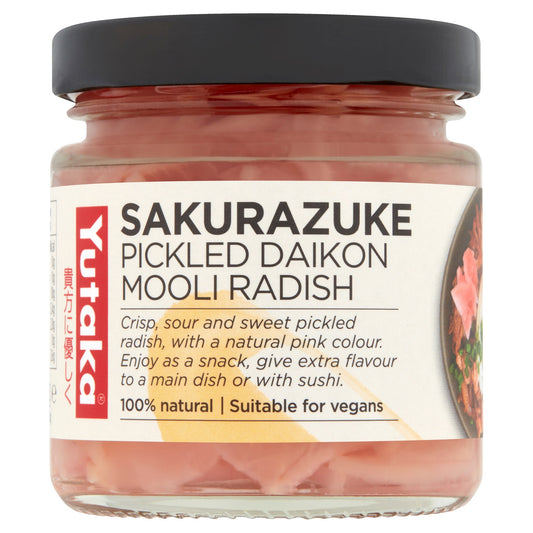
- Yutaka Sakura zuke (optional pickled daikon)
- Seasoned sushi rice
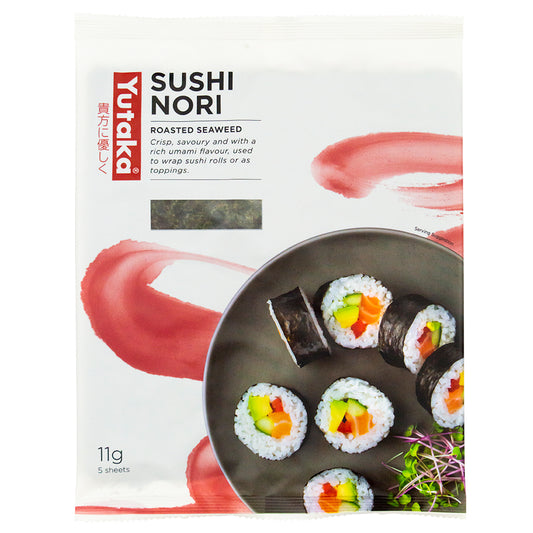
- Yutaka Sushi Nori Roasted Seaweed
- Yutaka Organic Tamari Soy Sauce
- Yutaka Hon Wasabi Paste
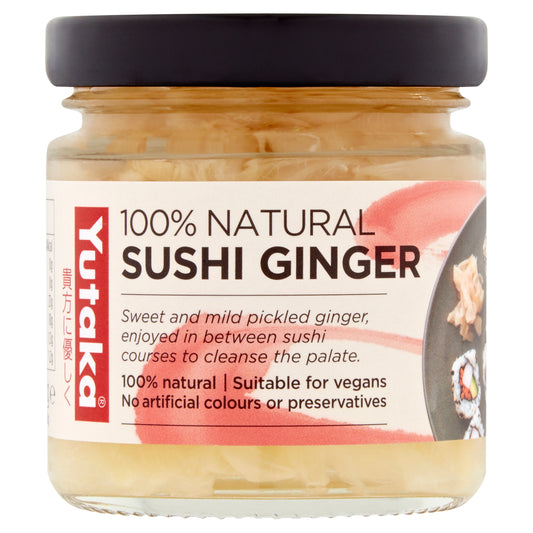
- Yutaka Sushi Ginger Gari
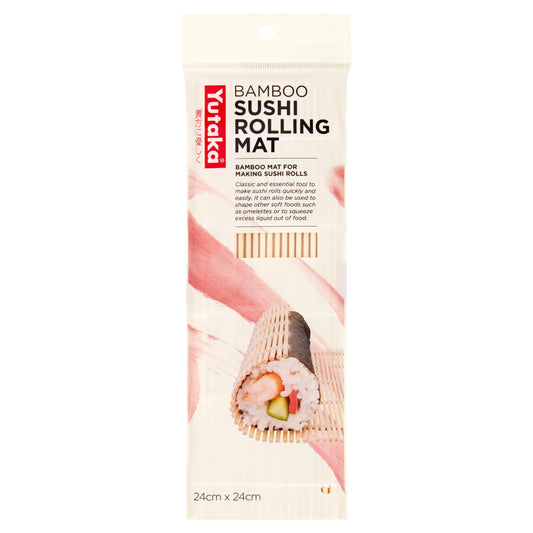
- Yutaka Bamboo Sushi Rolling Mat
調理手順
- Cover bamboo mat with cling film.
- Place horizontally on a surface.
- Cut nori in half and place rough side up onto the mat.
- Wet hands and spread seasoned sushi rice over the nori.
- Sprinkle sesame seeds over the rice.
- Flip rice & nori over carefully by folding over the other empty half of the mat, so the rice is now at the bottom.
- Place fillings of your choice next to each other along the centre but try not to overfill.
- Lift the closest edge of the bamboo mat and roll away from you.
- Compress tightly and leave 1.5cm gap on the top edge.
- Continue rolling and compress firmly.
- Wet a sharp knife and cut to pieces. (Wet knife between cuts.)
- Pack the sushi into a bento box and enjoy with sushi ginger, wasabi & soy sauce.
ポイント
Uramaki has sushi rice on the outside, so covering your bamboo sushi mat with cling film prevents the rice from sticking and makes the roll much easier to shape.
2. Wet your hands before handling sushi rice
Seasoned sushi rice is naturally sticky. Lightly wet your hands before spreading the rice over the nori to prevent it from sticking to your fingers and help create an even layer.
3. Don’t overfill your sushi roll
Use a small amount of avocado, cucumber, red pepper or other vegetables and arrange them neatly along the centre. Too much filling can make the uramaki difficult to roll and more likely to fall apart when sliced.
4. Roll firmly but gently
Use the bamboo mat to apply even pressure as you roll. The aim is to create a compact sushi roll without crushing the vegetables or squeezing the filling out of the sides.
5. Wet your knife between cuts
Use a sharp knife and lightly wet the blade before slicing the uramaki. Clean and re-wet it between cuts to prevent the sticky sushi rice from pulling the roll apart.
6. Mix and match your vegetable fillings
Avocado, cucumber and red pepper work particularly well, but you can also try asparagus, carrot, edamame or pickled daikon. Using vegetables with different colours and textures makes your Japanese sushi bento more visually appealing.
FAQ
Q.What is Uramaki Sushi?
A.Uramaki is a Japanese-style inside-out sushi roll with seasoned sushi rice on the outside and nori wrapped around the filling on the inside. Unlike traditional maki, where the nori forms the outer layer, uramaki is rolled with the rice facing outwards and is often finished with sesame seeds or other toppings. This vegetable version uses fillings such as avocado, cucumber and red pepper.
Q.How do you stop Uramaki Sushi from falling apart?
A.To keep uramaki from falling apart, use the right amount of sushi rice and filling and roll it firmly with a bamboo sushi mat. Avoid overfilling the roll, apply gentle and even pressure while shaping it, and use a sharp, wet knife when cutting it into pieces. Covering the bamboo mat with cling film also makes rice-outside sushi easier to handle.
Q.What vegetables can I put in Uramaki Sushi?
A.Uramaki Sushi can be filled with vegetables such as avocado, cucumber, red pepper, carrot, asparagus and pickled daikon. You can combine different vegetables to create contrasting colours, flavours and textures. This recipe is easy to customise, making it particularly suitable for homemade vegetable sushi and Japanese-style bento boxes.