

What Is Sake? A Beginner's Guide to Japan's National Drink

Sake is a Japanese alcoholic drink brewed from four ingredients: rice, water, koji (a cultivated mould) and yeast. Most bottles are between 15% and 17% ABV.
As Japanese restaurants have spread across the UK, sake has moved from specialist shops onto supermarket shelves and into online shops. Choosing a bottle is another matter, and most people start with the same two questions: is it closer to wine or beer, and should it be chilled or warmed?
This guide covers what sake is, how the main types differ, and how to choose, serve and buy a bottle in the UK.
Table of Contents
- ■ What Is Sake?
- ■ What Is Sake Made Of?
- ■ Types of Sake: Junmai, Ginjo and Daiginjo
- ■ What Does Sake Taste Like?
- ■ How to Drink Sake
- ■ Sake vs Shochu vs Soju: How They Differ
- ■ What Food Pairs Well With Sake?
- ■ Where to Buy Sake in the UK and How to Store It
- ■ Sake FAQs
- ■ Summary: Enjoy Sake in the UK Today
■ What Is Sake?

Sake is often called "rice wine" in English, but the way it is made is closer to beer than to wine.
Wine is fermented from sugar that is already present in grapes. Rice contains no sugar, only starch, so koji has to convert that starch before the yeast can ferment it. That two-stage conversion, grain to sugar and then sugar to alcohol, is exactly how beer is made. Because sake is never distilled, it belongs with wine and beer rather than with spirits.
Sake alcohol content is usually 15% to 17% ABV, a little above wine and well below spirits such as vodka and gin, which are around 40%.
A Brief History of Sake
According to the Japan Sake and Shochu Makers Association, sake dates back around 2,000 years. The earliest method relied on chewing rice to convert its starch, producing a drink known as kuchikami-zake, and brewing with koji became established around the 4th century. By the Heian period (AD 794-1185), the imperial court had its own sake-brewing office.
Source: Japan Sake and Shochu Makers Association – history of sake, including kuchikami-zake and the establishment of koji brewing.
Sake has been bound up with ritual ever since. It is offered at Shinto shrines, shared by the couple at a wedding, and used in kagami-biraki, the ceremony of breaking open a sake barrel with a wooden mallet. In Japan, sake and shochu, the country's traditional distilled spirit, are both regarded as national drinks.
How Strong Is Sake Compared to Wine, Beer and Spirits?
Most sake is 15% to 17% ABV. Beer is 4% to 6%, wine 11% to 14%, and spirits such as vodka and whisky around 40%. Sake therefore sits just above wine, and nowhere near vodka.
The reason lies in how each is made. Sake is brewed, and yeast can only produce so much alcohol before fermentation stops. Shochu, soju and vodka are all distilled after fermentation, which concentrates the alcohol.
None of that makes it weak, though. Sake is poured into small cups and sipped, so it is easy to lose track of how much you have had.
■ What Is Sake Made Of?

Sake is made from four ingredients: rice, water, koji and yeast. Rice plays the role that grapes play in wine, and koji is the one ingredient with no real equivalent outside Japan.
Production follows five stages. The outer layers of brown rice are milled away, and the milled rice is then washed and steamed. Koji mould is cultivated on a portion of that steamed rice, water and yeast are added, and the mixture ferments. Finally the fermented mash is pressed to separate the liquid from the solids, known as lees.
Koji does the work that makes sake possible, because yeast cannot feed on rice starch directly. Koji breaks the starch down into sugar, and the yeast turns that sugar into alcohol. Unusually, both stages happen at once in the same tank. The technique is called multiple parallel fermentation, and it is almost unique to sake: it is what allows a sake to be delicate in aroma and full in body at the same time.
What Is the Rice Polishing Ratio?
The rice polishing ratio, or seimaibuai, appears on almost every label. It states how much of the grain is left after milling, so a ratio of 50% means the outer half has been removed and only the core is used.
The outer layers are rich in protein and fats, which produce coarse flavours during fermentation, so the more the rice is polished, the cleaner the taste and the more pronounced the aroma. Polishing also uses up more of the grain and takes time, which is why a low ratio usually means a higher price.
■ Types of Sake: Junmai, Ginjo and Daiginjo

The main types of sake belong to an official classification, tokutei meisho-shu, or special designation sake. Two things determine the category: the rice polishing ratio and whether a small amount of distilled alcohol has been added.
| Type | Rice polishing ratio | Character | Suits |
|---|---|---|---|
| Junmai | No requirement | Savoury and full-bodied | Drinking with food |
| Honjozo | 70% or less | Light and clean | Everyday drinking |
| Ginjo | 60% or less | Fruity and aromatic | Wine drinkers |
| Daiginjo | 50% or less | Delicate and highly aromatic | Special occasions and gifts |
Junmai sake uses no distilled alcohol at all, and it carries the savoury weight of the rice. Honjozo has a small amount of distilled alcohol added, which lifts the aroma and leaves a cleaner finish.
Ginjo and daiginjo are brewed slowly at low temperatures using highly polished rice, which produces the fruity aroma known as ginjo-ka, often compared to pear or melon. If you are used to wine, these two are the easiest styles to start with. Junmai Ginjo and Junmai Daiginjo, which also appear on labels, are brewed in the ginjo style with no distilled alcohol added.
Other Styles of Sake
Three further styles sit outside the special designation categories.
・ Futsushu: Everyday Table Sake
Sake that does not meet the polishing or ingredient requirements is called futsushu. More than half of all sake brewed in Japan falls into this category, and it serves the same purpose as table wine does elsewhere: affordable, unfussy and often served warm.
・ Nigori Sake

Nigori sake is cloudy and white. It is pressed through a coarse cloth that deliberately leaves rice solids in the liquid, giving it a thick, creamy texture. Most nigori is sweet, although dry versions exist. That sweetness softens the alcohol, which makes nigori approachable for newcomers. It also goes well with desserts.
・ Koshu: Aged Sake
Koshu is sake matured for several years or more. It turns amber with age and develops complex notes of caramel, dried fruit and nuts, sometimes compared to sherry or Madeira. Very little is made, and it is usually served after a meal, or with cheese and chocolate.
Sparkling Sake
Sparkling sake has become popular well beyond Japan in recent years. Most sparkling sakes are weaker than standard sake, around 5% to 8% ABV, with a balance of sweetness and acidity that suits anyone new to sake. They work well as an aperitif, in much the same way as Champagne or Prosecco.
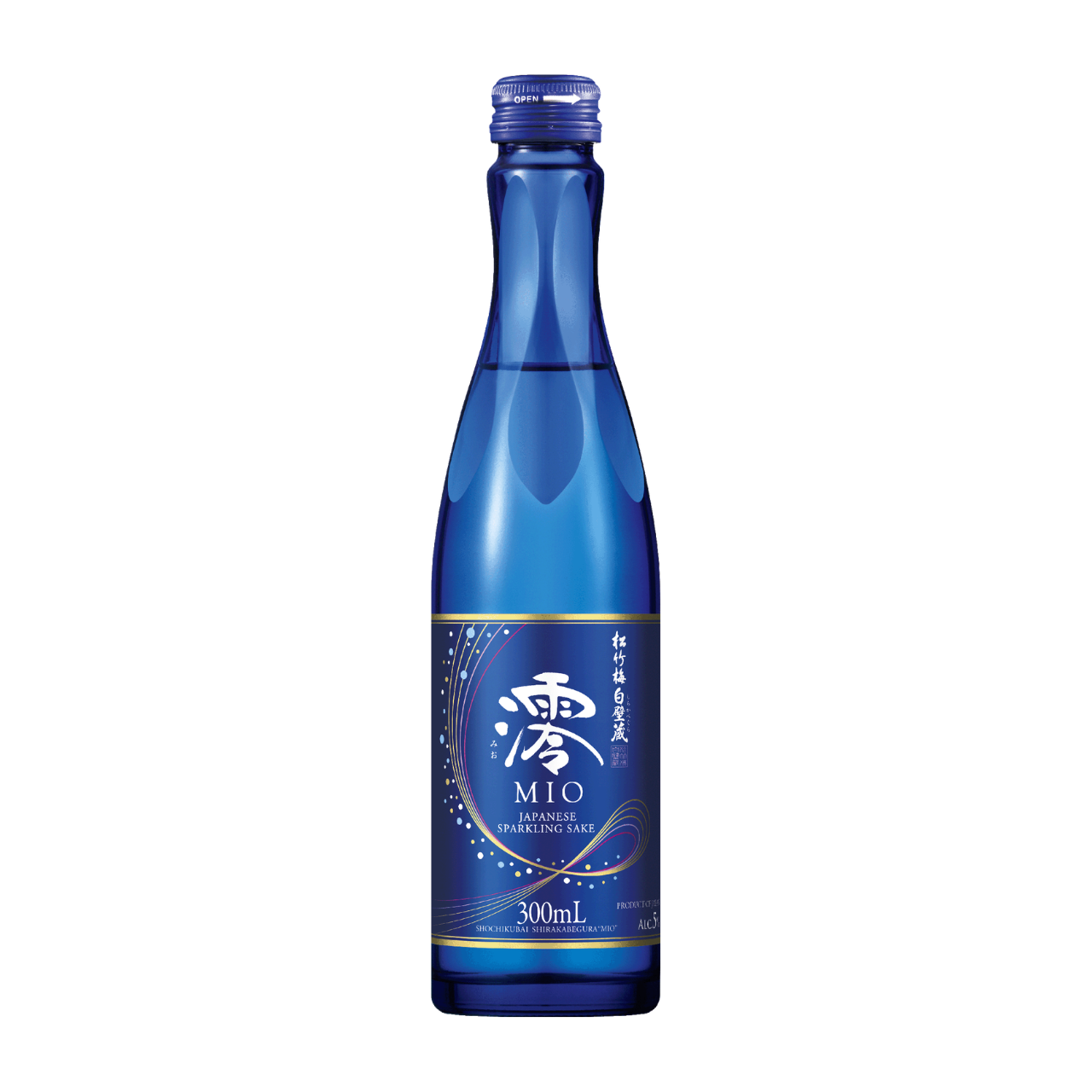
MIO Sparkling Sake 300ml
A light, low-alcohol sparkling sake from Shirakabegura, with a gentle balance of sweetness and acidity.
An easy aperitif and a comfortable first taste of sake for anyone new to it.
View ProductSake Tasting Sets
The differences are far easier to grasp by tasting than by reading about them. A set of several small bottles lets you compare a junmai with a ginjo, or the same bottle chilled and warmed, in one sitting. It also makes a good gift.
■ What Does Sake Taste Like?

If one word had to sum up sake, it would be umami: the savoury, mouth-filling quality found in stock, mushrooms and mature cheese. There is a soft sweetness from the rice alongside it, very little of the sharp acidity of wine and no tannins, so most people find it rounded and gentle.
Aroma varies more than flavour. Ginjo and daiginjo smell of pear, melon and banana; junmai is quieter and grainier, closer to cooked rice or nuts. Even the same bottle smells different at different temperatures.
People trying sake for the first time often say it is lighter than they expected. A chilled ginjo is a comfortable introduction if white wine is what you normally drink.
Sweet or Dry? Understanding Sake Flavour
Sweetness and dryness are measured by the Sake Meter Value, or SMV, which appears on some labels. The higher the positive number, the drier the sake; negative numbers indicate sweetness. As a rough guide, +6.0 or above is dry and -6.0 or below is sweet. Acidity changes how this is perceived, so two bottles with the same SMV can taste quite different.
In practice, you can keep it simple. If you want fruit and aroma, choose a ginjo; if you want savoury weight alongside food, choose a junmai.
If neither sounds quite right, start from the flavour itself rather than the category. Yutaka Shop Online groups its sake by flavour profile, so you can begin with the aromas and character you already enjoy.
■ How to Drink Sake

There is no strict etiquette around how to drink sake. Two things do change the experience: the temperature and the cup you drink from.
Hot Sake or Chilled? A Guide to Serving Temperatures
Sake can be served chilled, at room temperature or warmed, and the same bottle can taste noticeably different in each case.
| Temperature | Term | How the flavour changes | When to serve |
|---|---|---|---|
| 8-15°C | Chilled | Crisp and light, with fruit aromas to the fore | As an aperitif, or on a warm day |
| 15-25°C | Room temperature | Smooth and gentle, with restrained aroma | Alongside a meal |
| 40-50°C | Warmed | Fuller in body, with grain aromas opening up | On a cold day, or with slow-cooked dishes |
Source: Japan Sake and Shochu Makers Association, "How to Serve Sake".
Broadly, ginjo styles are chilled to show their aroma, while junmai and honjozo are warmed to bring out savoury weight. If the label or the brewery recommends a temperature, start there.
To warm sake, stand a tokkuri, the traditional serving flask, in hot water. A microwave works too, but it heats unevenly, so warm the sake in a heatproof jug, stir it, then pour.
Choosing Your Sake Cup
Sake is traditionally drunk from an ochoko (a small cup) or a masu (a wooden box), and poured from a tokkuri. The material and shape of a sake cup change both the mouthfeel and the way the aroma reaches you.
You do not need any of these to start. If aroma is what you are after, an ordinary white wine glass works perfectly well; breweries and restaurants in Japan increasingly serve it that way for the same reason.
■ Sake vs Shochu vs Soju: How They Differ

Sake is often confused with shochu, a Japanese spirit, and soju, a Korean one. The names sound similar and the bottles can look alike, but the three belong to different categories of drink.
| Drink | Category | Main ingredients | Typical strength | Flavour | Usually served |
|---|---|---|---|---|---|
| Sake (Japan) | Brewed | Rice, koji | 15-17% | Savoury, with a soft sweetness from rice | Chilled to warm, in small servings |
| Shochu (Japan) | Distilled | Barley, sweet potato, rice, buckwheat | 20-25% | Aroma of the base ingredient, clean finish | On the rocks, with water or hot water |
| Soju (Korea) | Distilled (mostly diluted style) | Rice, barley, sweet potato, tapioca | 16-25% | Clean and lightly sweet | Neat or mixed |
The key difference is that sake is brewed, while shochu and soju are distilled after fermentation. That is why they are stronger, and why they are usually diluted with water, hot water or soda.
Shochu and soju are not the same thing either. Shochu is Japanese, and the character of the base ingredient comes through clearly, whether barley, sweet potato, rice or buckwheat. Soju is Korean, and most of what is sold today is made by diluting a neutral spirit rather than by distilling a single ingredient. The result is clean and lightly sweet, and it is drunk neat or mixed.
■ What Food Pairs Well With Sake?

Sake is usually thought of as a partner for Japanese food, but it suits a much wider range of dishes.
Sushi, sashimi and tempura are the obvious matches. Sake has far less acidity than wine, so it does not overwhelm delicate fish. Pairing white wine with raw fish can produce an unpleasant fishy aroma, and the iron content of the wine is thought to be responsible; brewers deliberately use water with a very low iron content, which is one reason sake sits so comfortably alongside sushi.
It works just as well with food that is more familiar on a British table: mature Cheddar and blue cheese, roast pork and roast chicken, fish and chips. The rule of thumb is umami with umami. Anything with savoury weight works, from mushrooms and tomatoes to cured ham and shellfish.
For a special occasion, a premium daiginjo is more aromatic still, and priced to match.
■ Where to Buy Sake in the UK and How to Store It
Sake is sold through three main types of retailer in the UK: large supermarkets; Japanese grocers and specialist drinks shops; and online shops.
Shops and Online Stores

More supermarkets now stock one or two familiar labels. Japanese grocers and specialist drinks shops, particularly in London, carry a much wider range, with the advantage that you can see the bottle before you buy.
If you want to compare styles side by side, or if there is no specialist shop near you, online is the easier option. Yutaka Shop Online stocks junmai, ginjo and daiginjo, sparkling sake and tasting sets, and delivers across the UK.
Tazaki Foods, the company behind Yutaka Shop Online, was named Sake Retailer of the Year at the IWC Industry Awards UK 2026, the International Wine Challenge's awards for the UK drinks trade.
How to Read a Sake Label
A label carries a great deal of information, but two details are enough to begin with: the type (Junmai, Ginjo or Daiginjo) and the rice polishing ratio. Between them they tell you roughly what to expect from the flavour. After that, check the ABV, and the Sake Meter Value if it is given. Imported bottles often carry an English back label with a tasting note.
How to Store Sake
Sake is sensitive to light and to changes in temperature, so keep unopened bottles somewhere cool and dark. Two types need refrigerating even before they are opened: unpasteurised sake, sold as nama-zake, and nigori sake.
Once a bottle is open, contact with air slowly changes the flavour. Store it upright in the fridge and finish it within about a week.
■ Sake FAQs
Is sake a wine or a beer?
Neither, despite the name "rice wine". The starch in rice is converted to sugar by koji before fermentation, which makes the process closer to brewing beer. Unlike beer, though, sake uses no hops and is normally still rather than sparkling.
Is sake stronger than vodka?
No. Sake is around 15% to 17% ABV and vodka around 40%. Sake stops where fermentation stops; vodka is distilled, which concentrates the alcohol well beyond that point.
Can sake get you drunk?
Yes. It is slightly stronger than wine, and because it is served in small cups, it can be easy to underestimate how much you have had. In Japan it is normal to drink water alongside sake, a practice known as yawaragi-mizu, or "softening water".
Is sake gluten-free?
Sake is naturally gluten-free, brewed from rice, water, koji and yeast with no wheat or barley. Some products contain additional ingredients, so anyone with coeliac disease or gluten sensitivity should check the label.
Is sake halal?
No. Sake is an alcoholic drink of around 15% to 17% ABV, so it is not halal. Alcohol-free drinks brewed in the sake style do exist, and some of them carry halal certification, so check the label if that matters to you.
What is the difference between sake and soju?
Sake is Japanese and brewed; soju is Korean and distilled. Their strengths overlap, at 15% to 17% for sake and 16% to 25% for the diluted style of soju, but they are made in completely different ways. See Sake vs Shochu vs Soju for a full comparison.
What is the difference between sake and shochu?
Sake is brewed at 15% to 17% ABV; shochu is distilled at 20% to 25%. Shochu is also made from a wider range of ingredients, including barley, sweet potato and buckwheat as well as rice, and is usually served diluted with water, cold or hot. See Sake vs Shochu vs Soju for a full comparison.
Does sake go off?
Unopened, a bottle kept cool and dark is at its best for about a year from the production date, unless it is a koshu intended for ageing. Once opened, keep it in the fridge and finish it within about a week, before the flavour begins to change. Nama-zake and nigori sake need refrigerating from the start and keep for around nine months. See How to Store Sake for storage in more detail.
Is sake served hot or cold?
Both are correct. Chilling sharpens the aroma; warming brings out umami and roundness. The best temperature depends on the bottle, so try the same sake both ways. See How to Drink Sake for more on serving temperatures.
■ Summary: Enjoy Sake in the UK Today
Sake is a Japanese alcoholic drink brewed from rice, water, koji and yeast. At 15% to 17% ABV it is a little stronger than wine and much weaker than any spirit, and its flavour is built on umami. To choose a bottle you need only two decisions: junmai or ginjo, and chilled or warm.
Buying sake in the UK is straightforward now that online shops carry a full range. If you cannot settle on a first bottle, a tasting set or a lower-alcohol sparkling sake is a good place to begin.
-
Japan Sake and Shochu Makers Association
History of sake, kuchikami-zake, and the establishment of koji brewing during the Heian period.
-
Japan Sake and Shochu Makers Association – "How to Serve Sake"
Guidance on serving temperatures and how flavour changes when sake is chilled, at room temperature or warmed.
-
International Wine Challenge – IWC Industry Awards UK 2026
Tazaki Foods, the company behind Yutaka Shop Online, was named Sake Retailer of the Year.
View IWC Industry Awards UK 2026 winners